* Trigger Warning *
Contains topics of self-harm and abuse.
* Trigger Warning *
From under the heated blanket.
Before the last vestiges of silence are broken by the pitterpatter of my kids’ feet stomping down the stairs, signalling the day’s begun.
Sunday, December 14th
Dear Reader,
Today’s a long one.
I asked to be part of FilmStack’s 100 Days of Inspiration Challenge.
This is my manifesto.
Here we go.
Enjoy,
-Mike
The Promise I Made at Fourteen


My grandmother’s laugh.
Her chuckle is burned into my memory.
She’d gruff to us…
“If you want to do anything, you’d better have brass balls and perseverance.”
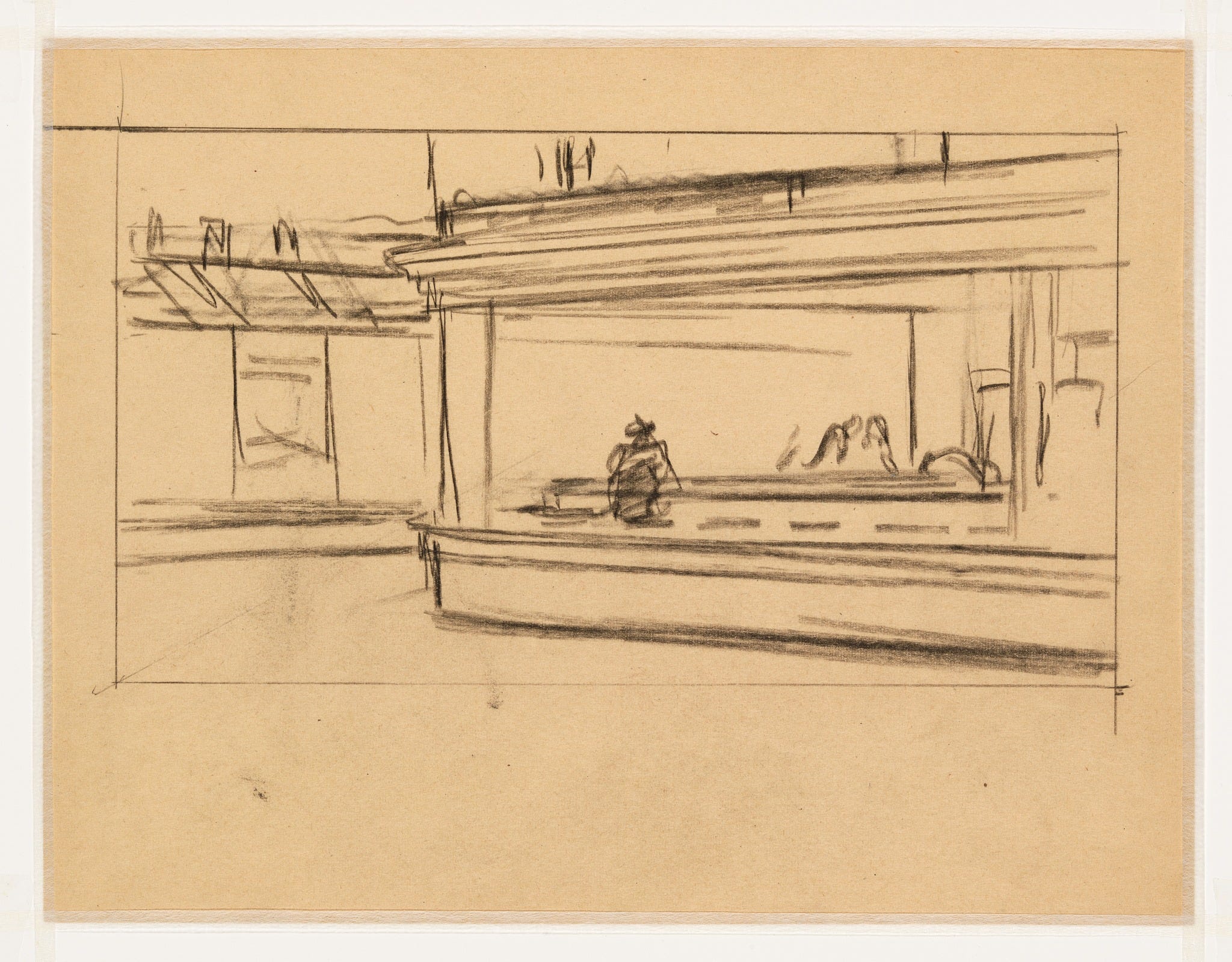
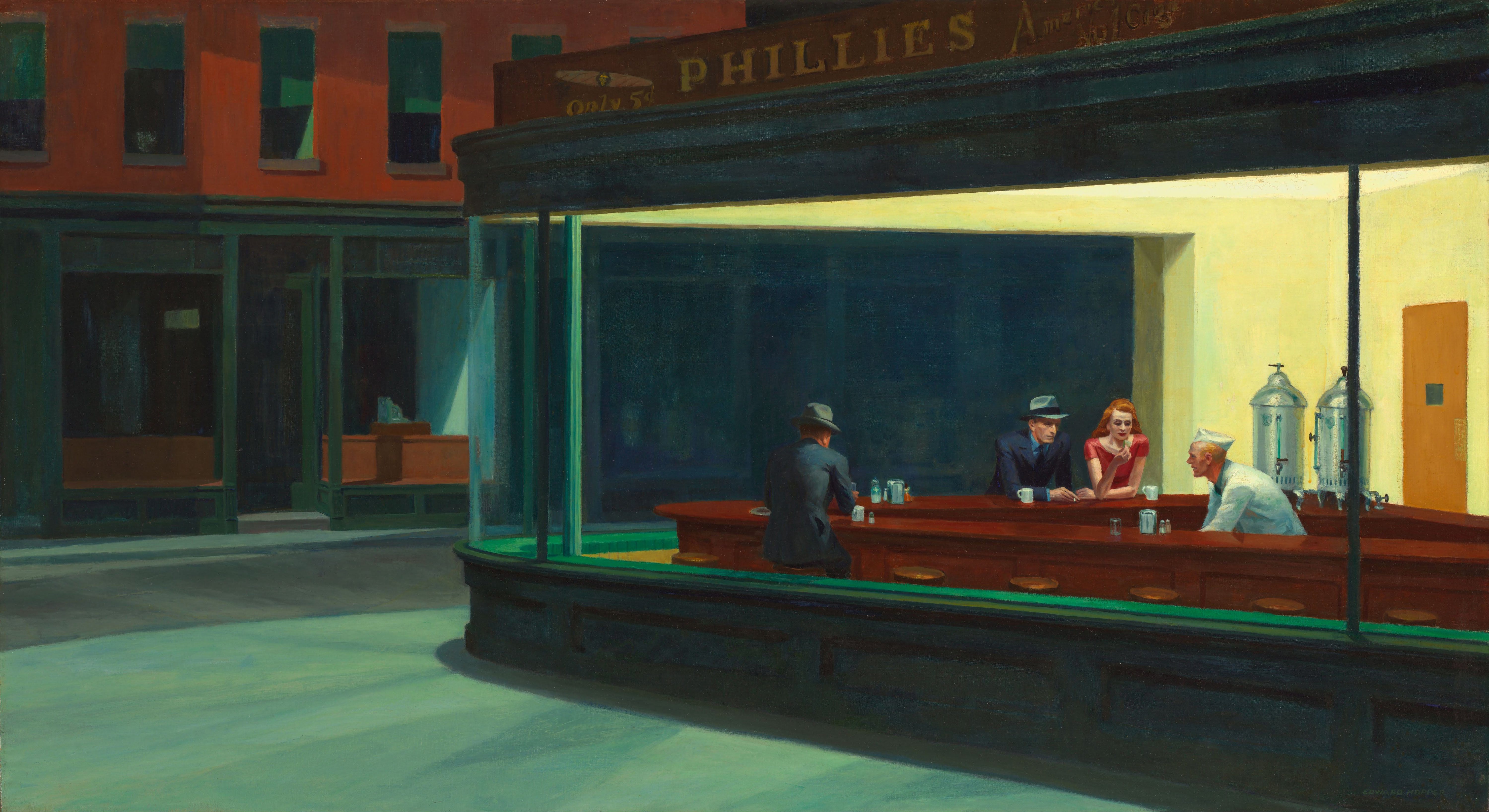
Well, right at the turn of the Millennium, I saw Edward Hopper’s Nighthawks (1942) in person.
It blew my mind as a young teenager.
That day cemented Hopper’s status as the wellspring of my ideal cinematic expression, albeit as a painter.
His expressive lighting.
His emotive use of negative space.
His production design.
His storytelling.
His direction.
It’s all there.
In that painting on that day, I said to my boyhoodself— “I want to be a filmmaker, and THAT is my style. That right there.”
And later that week, I told her my goal.
She said, “If you want to do anything, you'd better have brass balls and perseverance.”
Somehow…
I lost my way between the end of high school and the age of thirty.
Until a reckoning started.
Eight years ago today, in fact.
The Detour That Almost Killed Me
“I didn’t realize slitting throats was part of my job,”
The Speaker of the U.S. House of Representatives muttered as he left the Hill’s Christmas Party, that year.1
He was off back to the Captiol to dispose of the bodies of two repugnant rank-and-file Members in a private meeting.
You see, when I lost my way, I tripped into law school and then into national politics.
All because I was too scared to authentically pursue my ultimate desire— filmmaking— misbelieving it would’ve caused financial hardship.
And anything was better than being poor.
Even selling my soul.
I quickly rose from obscure intern to crisis communicator on Capitol Hill, especially as a member of the Speaker’s Whip Team.
For those few years, I had advised on every major political scandal to Committee Chairmen, including navigating one through censure.
But my next challenge damn near killed me.
Leadership asked that I rehabilitate an unruly Texas Congressman.
Thinking this would be a simple task of reigning him in, I accepted.
I was wrong.
Almost immediately, this particular Congressman started to sexually harass my interns and created a hostile work environment.
I’ve faced bullies all my life, but it never gets any easier.
There was Mark ********, who in high school pushed me to a breaking point.
I still have the burn marks on my arms from that first time I self-harmed, believing his assessment of my value over my own self-worth.
Sadly, this time, as a thirty-year-old, my inability to protect others in my care was the problem.
I was suffocating between the pressure of a national political machine and my principles.
I lost fifty pounds in six months, developed suicidal thoughts, and tormented myself as I believed I failed my staff because I couldn’t protect them from the berating texts at 3:00 am, the threatening phone calls, and the repeated public humiliation of name-calling, to sexually lewd comments.
Each morning would commence in a complete sense of despair.
By the time I got to the U.S. Capitol Complex, I’d have a dealer’s choice when my anxiety later peaked– which bathroom would I choose to retch in today?
The one near Washington’s Tomb in the U.S. Capitol Crypt or the one near where the Nixon Impeachment hearings were held.
It was clear— I had to leave politics.
But what to do about that unethical Congressman?
The usual offer: I could go quietly and keep my network, but that would let his path of destruction continue.
The alternative: speak out and face blackballing.
What Unfinished Work Does to the Soul
Thankfully, I chose a public reckoning and testified to the House Ethics Committee.2
Even though it cost me friends, colleagues, a career, and a community, for the first time in months, I could look at myself in the mirror with a shred of self-respect.
Jobless and now in a full-blown mental health crisis, I hit rock bottom.
I had lost the center of who I was and what defined me.
The only way forward was through two hard years of talk therapy, psychiatric medicine, and rebuilding the foundations of my soul.
Now, in the ashes of that pivotal moment, I took my biggest leap.
I had made a promise to myself at fourteen.
Yet, I broke that promise every day from fourteen to thirty-three.
It was a dream.
A dream worth persevering and fighting for.
Now was the perfect opportunity to re-commit once and for all to my childhood goal of being a filmmaker.
So, I shot my first short.
It sucked, but I learned from making that film that my strengths were on-set leadership and seeing the “edit”.
I also learned the areas where I struggle and am hopeful to improve on are translating my vision into reality.
What I found after making my film was a dearth of places to share my story, so I did what any good filmmaker does: I created my own opportunity.
I rented a theater, started my own festival, hosted twelve local filmmakers, and featured their films to a sell-out audience, uplifting others in the absence of my talent.
I’m proud of our small local event, one we ran for three years before it succumbed to the pandemic.


Then, at the end of 2018, my wife and I welcomed our first child, Emma.
It made sense that I would stay home and childrear.
In between bottle feedings and naps, I developed my craft.
As Emma learned to walk, I learned to invest in independent directors and selected four diverse directors.
I worked remotely to support their visions from conception through to completion.
Two years later, Wyatt joined our family as those films hit Tribeca, Berlinale, Busan, and Big Sky, yet I still hadn’t worked on-set.
So I iterated again, this time, I would develop features to produce, focusing on underrepresented voices.
I hired female writers to conceive scripts on concepts we created.
Then I crafted the business strategy for a Southern Gothic whodunnit.
We secured initial funding, and all was well.
As Wyatt learned to walk, the strikes stalled us, and two of the three projects lost their funding.
Leaving one sole project left – Burying Doris.
A wry, sick joke.
My film, BURYING DORIS, is the story of an estranged New England farm family who is forced home to settle the estate of their beloved grandmother as well as a few lifelong grudges.
Imagine Hitchcock’s Rebecca meets August Osage County.
A larger-than-life matriarch, but a film based in the immediate void of her loss.
The vacuum— a presence like that creates.
It was created for the simple task of grieving my grandmother.
She was our matriarch.
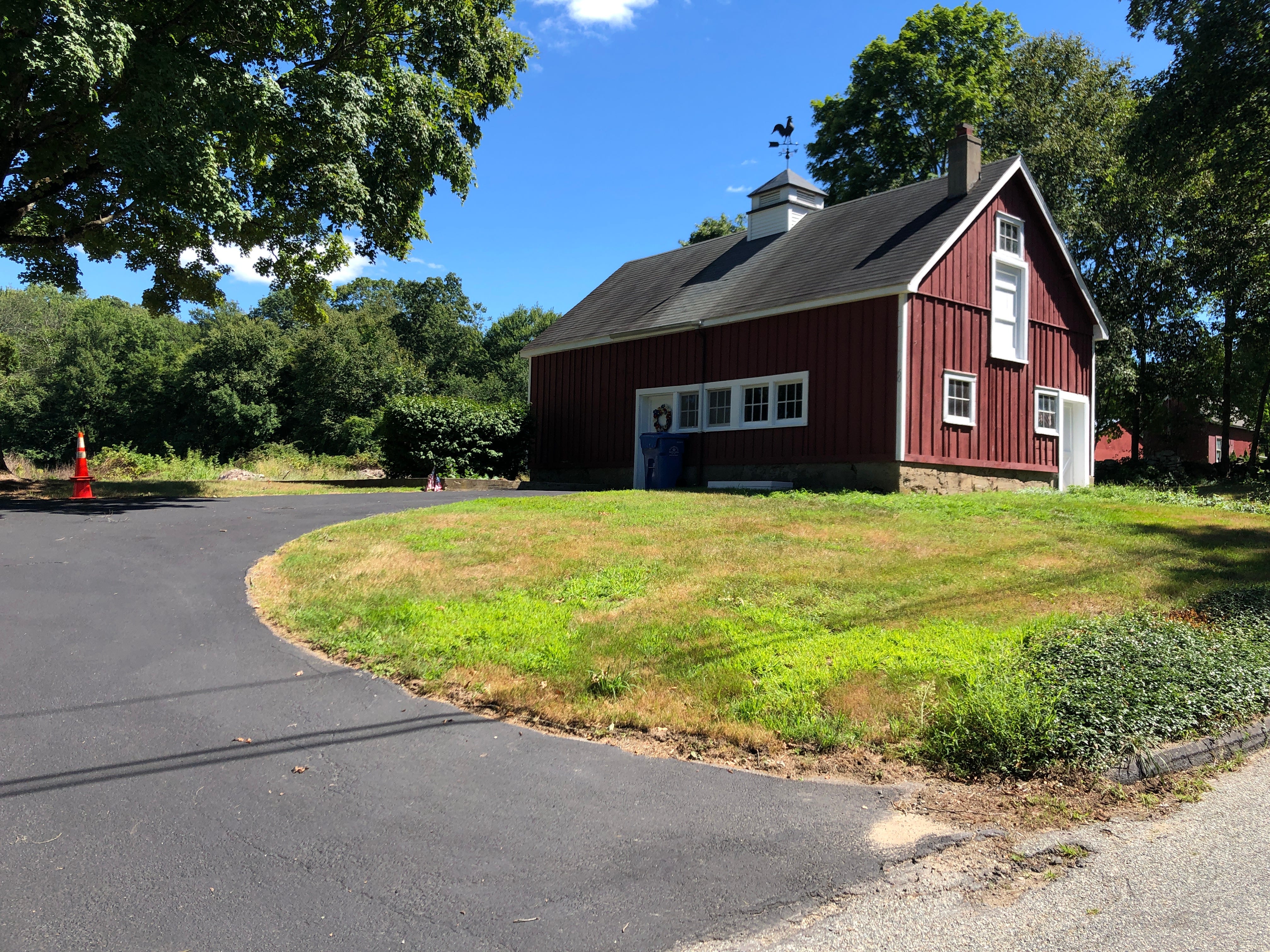
She fought for nearly ninety years, working seventy of them on our family farm.
From after World War II all the way til COVID.
Through struggle after struggle.
She was the image of perseverance.
The definition of brass balls.
Yet, I couldn’t get the project off the ground.
The project was an albatross around my neck.
And having it unproduced meant I was unable to properly grieve her.

The original goal was a $1 million dark comedy grounded in the truth of grief using a packaged vehicle.
The script was tight.
The writer was perfect; he’d just won the Austin Film Festival’s national screenwriting award.
And I had more than enough funds (7%) to get started and place actors on deposit, my casting director said.
Having had little experience directing, it was important that I first direct a “SAG Short Agreement” approved proof-of-concept.
I wanted to use professional actors, crew, and a location to show my skill, effort, and the inciting incident of the story.
The why behind Doris’ death.


Why I’m Choosing the Smallest Viable Dream
After completing the proof-of-concept short, life got in the way— again.
The hurdles were again medical, this time.
A diagnosis of a rare autoimmune disease for me, and a third pregnancy that ended in complications for my wife.
(Don’t worry, she and River are now both healthy.)
But, I’ve hit roadblock upon roadblock.
And my doctors are encouraging me to get unresolved projects finished sooner rather than later.
Not regular projects.
The ones that can be done any old time.
But the projects that kick my soul, if left unfinished.
With my particular autoimmune disease, my window of opportunity is closing.
So, maybe that original goal is dead, much like my Grandmother, and no matter my efforts, it can not be revived.
But, since I am a father, I know the secret to death: it’s not immortality, but new mortality— a.k.a. new life.
This isn’t a story that needs a million dollars.
This is a story that needs energy,
Creation.
Life.
Maybe this film, as a pure exercise in grief, can pivot and still align with my business principles and goals.
Maybe this is a micro-budget project.
One that can be done in under a year.
One that can be accomplished with the resources we already have.
One that can still make ROI, albeit on a lower scale, but still ROI nonetheless.
Maybe this is the way.

I’m not so sure yet, but it feels right.
It feels better.
And it feels like each step in this direction is another shovel of dirt that will bring closure.
But there are two more twisted jokes left that cause her echoing laughter to ring in my ears.
The Ecosystem I’m Building
The first— I recently ran for my town’s first selectman (think New England’s parochial-style mayor) and lost.
Had a great showing, but still lost.
I got the largest vote total for an unaffiliated candidate in our 239-year history as a town.
However, during that process, I realized that my community is missing a cultural centre.
My town is a cinematic desert.
Upon researching, I found that some farmers in other parts of America have turned unused pastures into mini drive-ins.3
I could easily do that in one of my spare hayfields, and when I broached the idea with locals, they were thrilled.
A place for families, teenagers, and adults (on date night) could finally go that isn’t the local VFW or Elks Lodge.
Some even asked how they could help get involved in my filmmaking!
Which then begged a hypothesis…
What if I make my films hyperlocal, focusing on the town’s businesses, my online, and the regional film community for help?
What if I then screen those micro-budget films as well as cult classics and other filmmakers’ works at the micro drive-in to make money, while entertaining my community and uplifting my colleagues?
What if I then document the lessons learned from both those projects and distill them across my online film community?
And what if I took all the fees earned from knowledge sharing, to movie making, to distributing them, and poured those monies back into this cycle to help other filmmakers make their first feature, albeit at a micro level?
And then repeat the cycle.
Could I finally have an ecosystem that:
Has a who — for three distinct audiences: film lovers, filmmakers, and my local community
Has a what — making at first one film and one drive-in, and then other micro films
Has a why — At first, so I can bury my Grandmother, and then to uplift others
Has a when — this year, 2026, and into the future
Has a where — In my hometown, in New England, and here on Substack
And has a how — via a loop of collaboration and support, both in-person and online, because I built with my community and audience along the way. No isolated from them.
Then the complete picture emerged.

So this is the Venn diagram of my 2026; the actions are straightforward:
Direct my first feature film, grounded in grief that moves viewers
Build a drive-in theatre on a tiny scale to impact all of my communities
Build and foster an online and in-person community that can help me accomplish my goals while sharing my authentically raw experience undertaking the above actions.
And the universal thread pulling across each of these projects, uniting them, is my Grandmother.
By honouring her in each step, I can accomplish my tasks.
Tasks like fulfilling a boyhood dream.
Tasks like making that movie as a way to honor her.
By making it on her farm.
Then showing that film and others on her farm.
And uniting my in-person and online communities through sharing my progress.
Why I’m Sharing This Now
Because this is important. I’m not saying “I figured it out.” I'm saying:
I’m still inside the fight—and choosing to continue anyway.
So I’ll use her words as motivation and inspiration as I fight this year.
I hope you will, too.
As Doris said…
“If you want to do anything you better have brass balls and perseverance”.
Oh, and that last sick joke—
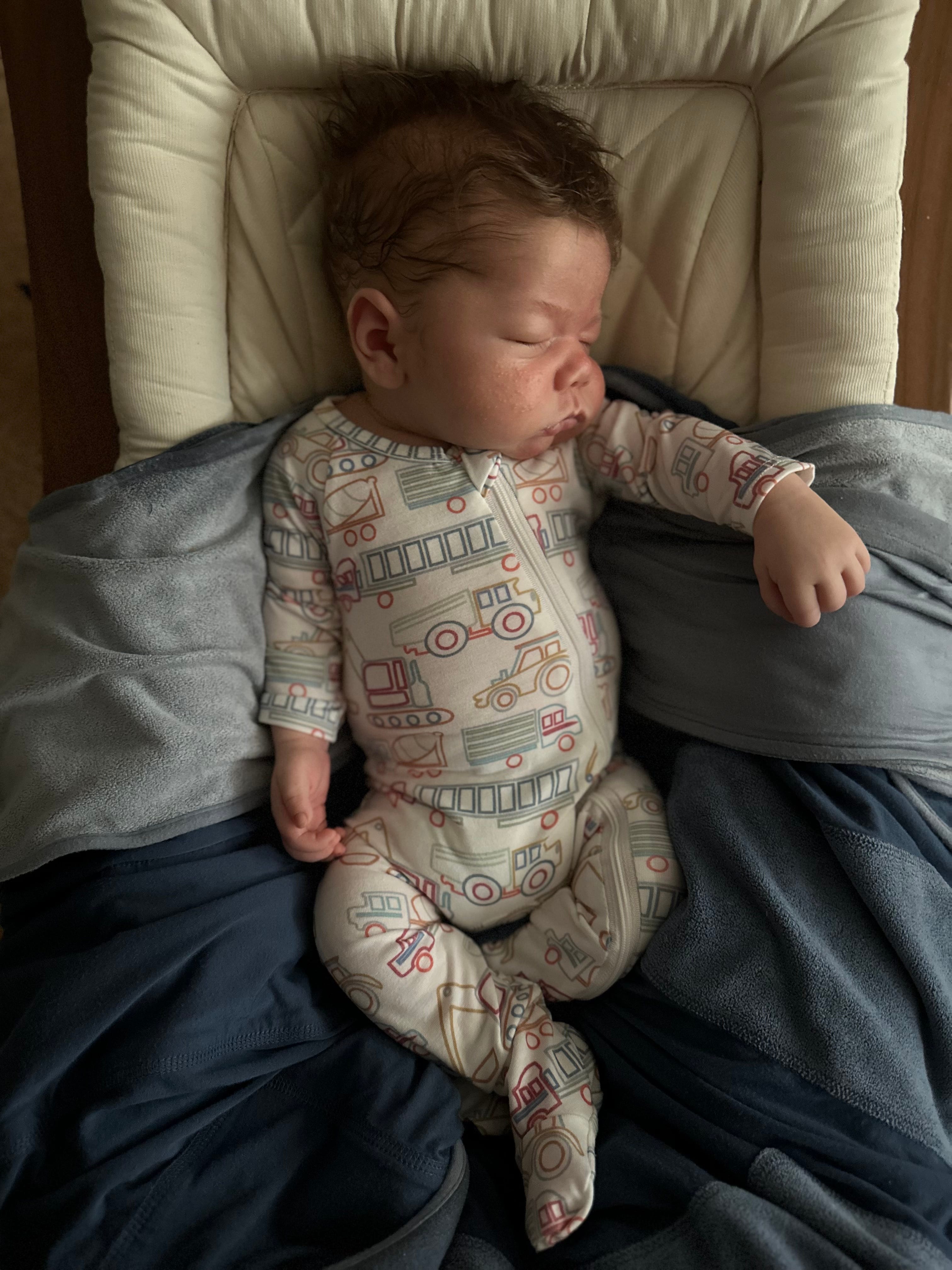
My son River.
Our last kid.
He was born on May 15th.
Which just so happens to be my Grandmother, Doris’ Birthday.
I can hear her ghostly chuckle now as I edit this post, and in the hours before delivery as her birthday approached and River was arriving.
It reminds me, I’ve persevered through worse.
We all have.
Going forward, my goal here on Substack is simple— share my journey and inspire a few of you.
Because the NonDē Filmstack community continues to inspire me daily.
Pardon my French, but y’all got some brass balls!
Again, I’ll try to share what I learn along the way.
And if you ever need to commiserate with someone, shoot me an email.
I’m happy to help any of you, fight to keep the faith!
To preserve.
We can do it!
Together, with Faith.

M.P. Rekola
P.S. How I Sustain the Work
I’m an independent creator. I don’t have a studio overhead or trust fund backing this work. I earn my living through:
Affiliate links, views, and one-time donations (click here).
Sales of The Modern Filmmaker’s On-Set Filmmaking Dictionary on Amazon. I wrote this to help filmmakers of all skill sets
Producing industrial and commercial work through Goodworks (you can hire us)
Consulting on individual projects
And a micro drive-in movie theatre, I’m currently building
None of this is separate from the art.
It’s what allows the art to keep happening.
Reach out if you have an opportunity.
Reminder— advice & networking are always free.